
1. What is ADHD?
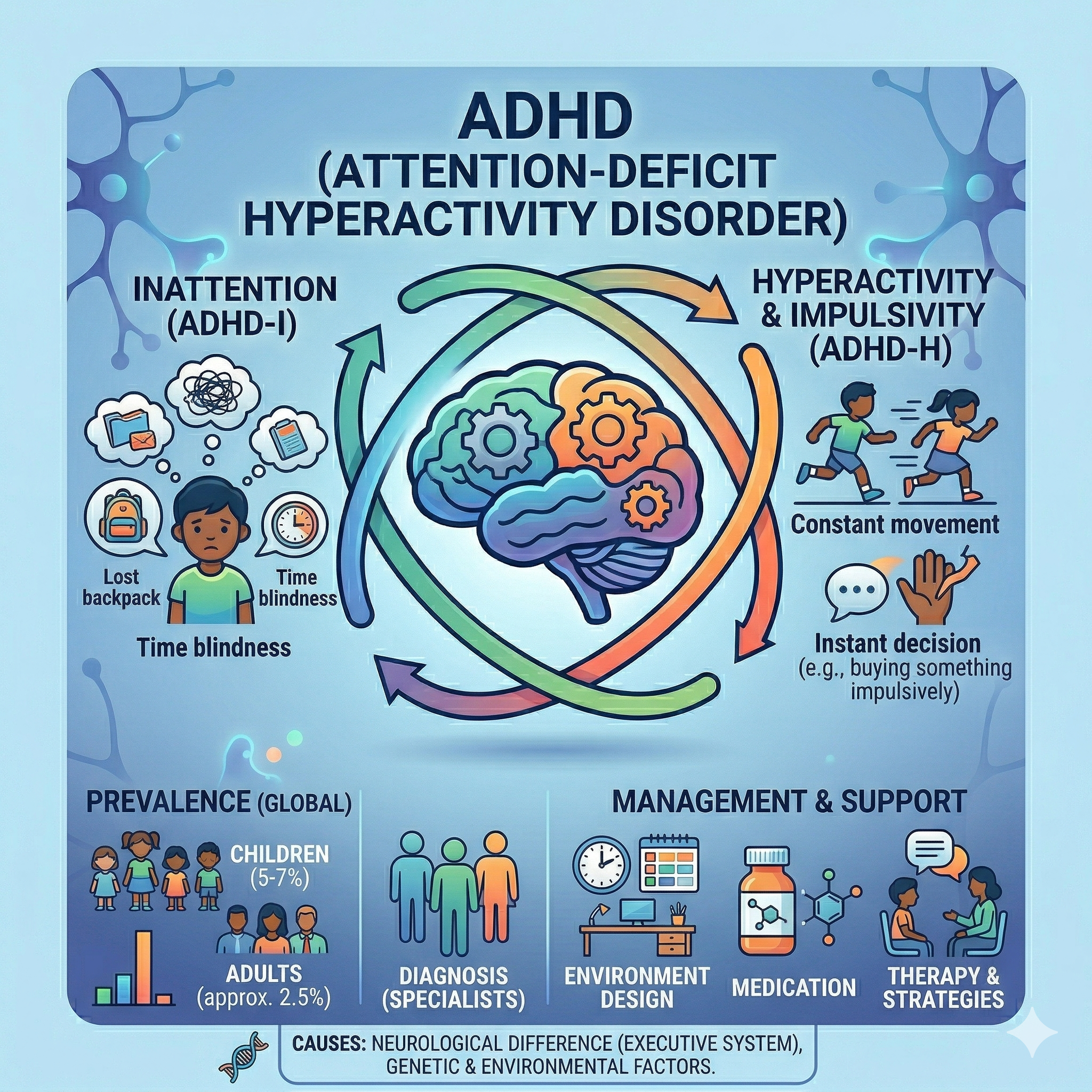
ADHD is a neurological difference in how the brain’s “executive system” manages information and regulates behavior. It is not a result of “bad parenting” or a lack of discipline; it is a physical difference in brain chemistry and connectivity, particularly involving neurotransmitters like dopamine.
The Lifespan Factor: While often associated with children, ADHD is a lifelong condition. Many adults remain undiagnosed, often finding that their symptoms manifest as chronic “disorganization” or “restlessness.”
Executive Function: This is the brain’s “management system.” For people with ADHD, the management system struggles to prioritize tasks, sustain focus, and regulate emotional impulses.
2. Core Characteristics
ADHD presents differently in everyone, but symptoms generally fall into two categories:
Inattention
- Difficulty sustaining focus: Wandering off task or having “internal” distractions.
- Lack of persistence: Starting projects with high energy but struggling to finish them.
- Disorganization: Losing items frequently or struggling with time management (often called “time blindness”).
Hyperactivity & Impulsivity
- Physical Restlessness: Fidgeting, tapping, or feeling a constant need to move. In adults, this often feels like an internal sense of “extreme restlessness.”
- Impulsive Decisions: Acting without thinking of consequences, such as interrupting others in conversation or making snap purchases.
3. The Size of the Problem
ADHD is a global reality that affects social and academic success.
- Prevalence: It is estimated to affect 5% to 7% of children and approximately 2.5% of adults worldwide.
- The Gender Gap: Historically, boys were diagnosed more often because they tend to show “hyperactive” symptoms. Girls are often underdiagnosed because they may present with “inattentive” symptoms (quiet daydreaming), which are less disruptive in a classroom.
4. How Families & Individuals Are Affected
Living with ADHD without support can lead to a cycle of frustration and low self-esteem.
- The “Naughty” Label: Because ADHD symptoms are behavioral, children are often labeled as “defiant” or “naughty” rather than being recognized as having a brain that processes stimuli differently.
- School Struggles: Traditional classrooms require long periods of sitting and sustained focus—the two things most difficult for an ADHD brain. This leads to academic underachievement despite high intelligence.
- Emotional Dysregulation: Many people with ADHD experience emotions more intensely, leading to quick outbursts or deep rejection sensitivity.
5. Diagnosis and Management
A diagnosis is typically made by a specialist (paediatrician, psychiatrist, or psychologist) after observing behavior across different settings (home and school).
The Multi-Modal Approach to Support:
- Education: Understanding the “ADHD brain” is the first step for parents and teachers.
- Environment Design: Creating structure, using visual timers, and breaking tasks into small, “dopamine-rewarding” steps.
- Medication: For many, medication helps balance brain chemistry to improve focus and impulse control.
- Therapy: Cognitive Behavioral Therapy (CBT) can help develop coping strategies for organization and emotional regulation.
The SPARKS Perspective
For families dealing with ADHD, support groups like SPARKS are essential. They move the conversation away from “fixing a broken child” toward “unlocking a different brain.” ADHD individuals are often highly creative, spontaneous, and excellent problem-solvers in a crisis. Support groups help parents harness these strengths while managing the day-to-day challenges of the condition.