
1. Understanding Neurodevelopment
Neurodevelopment is the process by which the brain grows and organizes itself. It isn’t a static blueprint; rather, it is a dynamic interaction that begins in the womb and continues through adolescence.
How a Disorder Develops
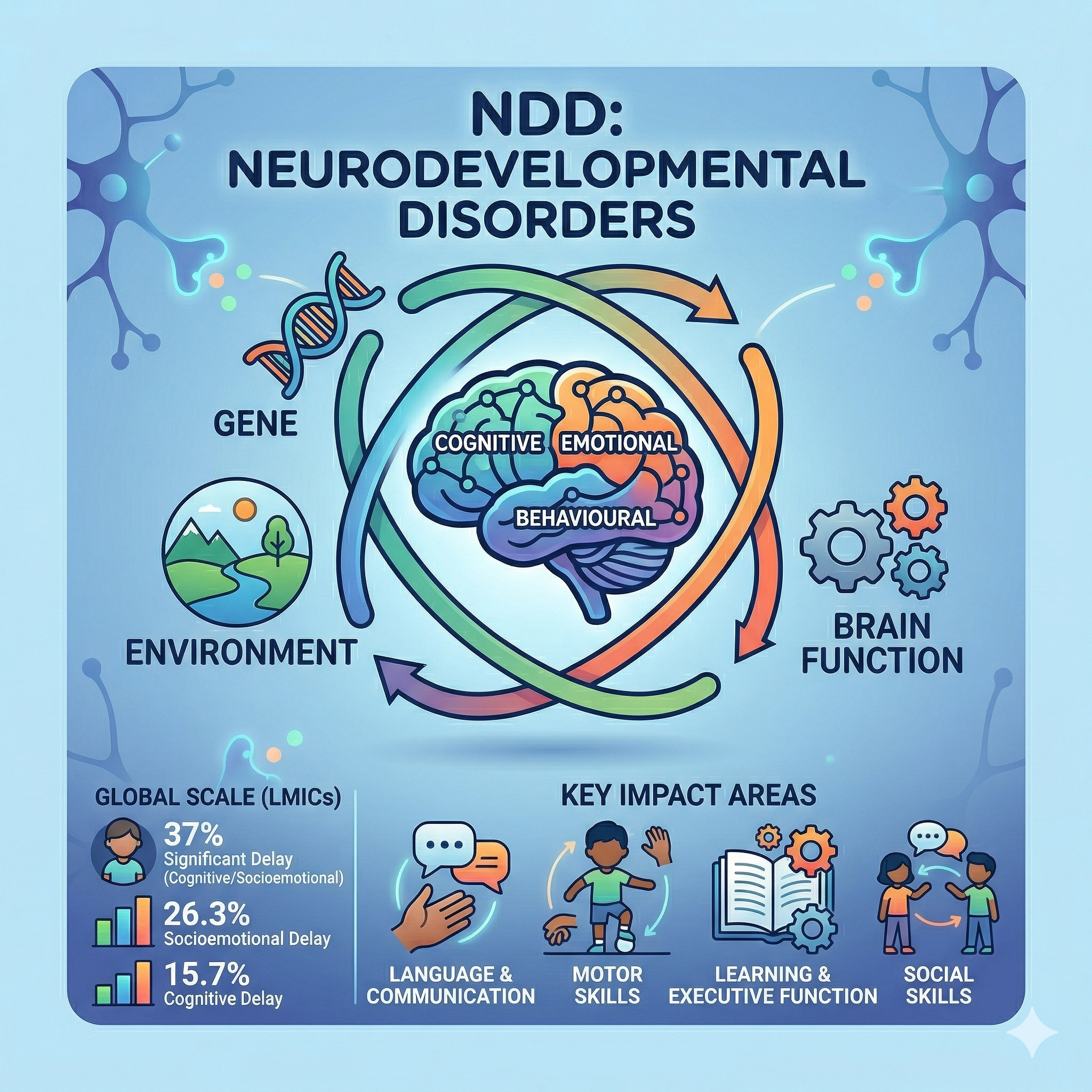
A disorder occurs when this dynamic process is significantly disrupted. It is rarely caused by a single factor, but rather a combination of:
- Genetic Risk: Hereditary factors or chromosomal conditions (e.g., Down’s Syndrome).
- Environmental Factors: Influences during pregnancy, birth, or early childhood.
- Nurturing/Social Input: The level of stimulation and support a child receives.
When these disruptions persist, they result in developmental deficits—shortfalls in the brain’s “wiring” that affect how a child processes information, moves, or interacts with others.
2. The Scope of NDD
Neurodevelopmental disorders are more common than many realize. They typically appear early, often before a child starts school, affecting their ability to function in social or academic settings.
Common Disorders & Prevalence
| Disorder | Estimated Prevalence | Key Impact Areas |
| Learning Disabilities | ~10% | Literacy, numeracy, and information processing. |
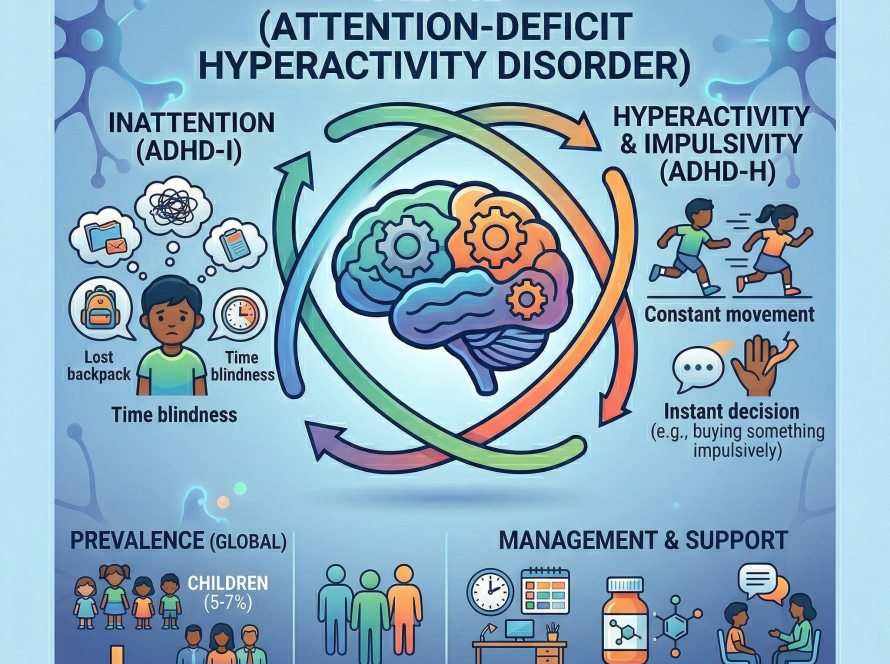
| ADHD | 5–7% | Attention, hyperactivity, and executive function. |
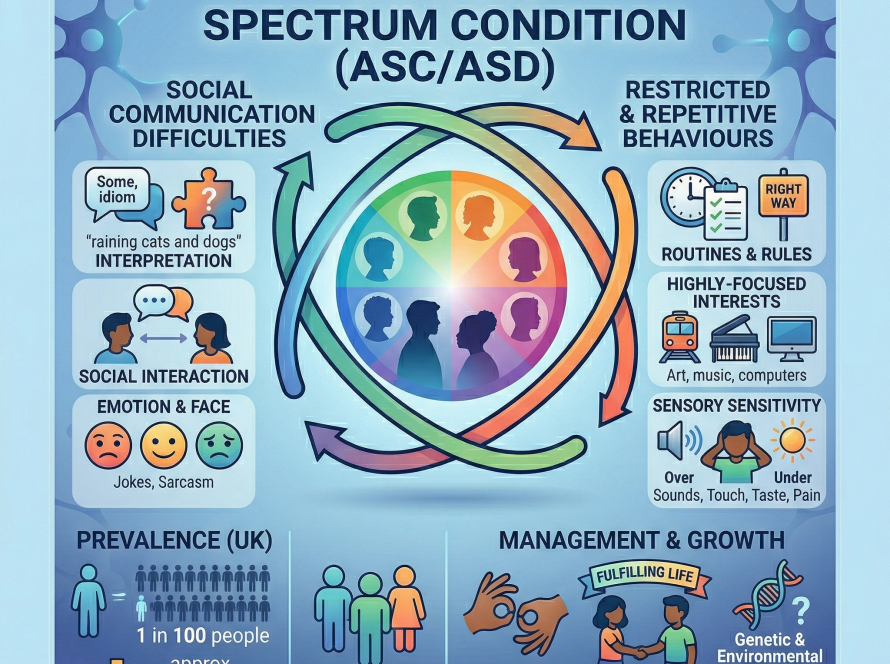
| Autism (ASD) | ~1% | Social communication and sensory processing. |
| Tourette Syndrome | ~1% | Motor and vocal tics. |
The Global Impact: In low- and middle-income countries (LMICs), the “size of the problem” is even more pronounced, with nearly 37% of children experiencing significant delays in cognitive or socioemotional development.
3. The “Gap” in Care: How Families are Affected
The text highlights a painful reality: the struggle doesn’t end with a diagnosis; often, that is where a new set of challenges begins.
- The “Diagnostic Cliff”: Families often face long waits for assessment, only to be “discharged” quickly once a diagnosis like Autism is given, leaving them without a roadmap for long-term health management.
- Professional Negativity: Parents often report receiving a “negative outlook” from clinicians, which can lead to feelings of abandonment and hopelessness.
- Social Isolation: The stigma or lack of understanding from friends and family can make parents feel “scared to talk,” leading to profound isolation.
4. The Solution: Resilience via SPARKS
Because the medical and educational systems often operate in silos, the SPARKS parent support group (established in September 2018) serves as a bridge.
How SPARKS creates a “Sparkling Future”:
- Identifies Gaps: Bridging the divide between medical diagnosis and everyday management.
- Builds Resilience: Empowering parents through shared experience and peer support.
- Community Advocacy: Reducing the stigma so parents no longer feel they have to hide their child’s condition.
Summary Table: Systemic Challenge vs. SPARKS Solution
| The Problem | The SPARKS Approach |
| Isolation and Stigma | Peer support and open dialogue. |
| Lack of Ongoing Support | Continuous community engagement and guidance. |
| Negative Outlooks | Focusing on a “sparkling successful future.” |
| Information Gap | Helping parents understand “what they can do.” |
By moving from a purely medical model to a community-based support model, groups like SPARKS help families transform a daunting diagnosis into a manageable journey of growth.